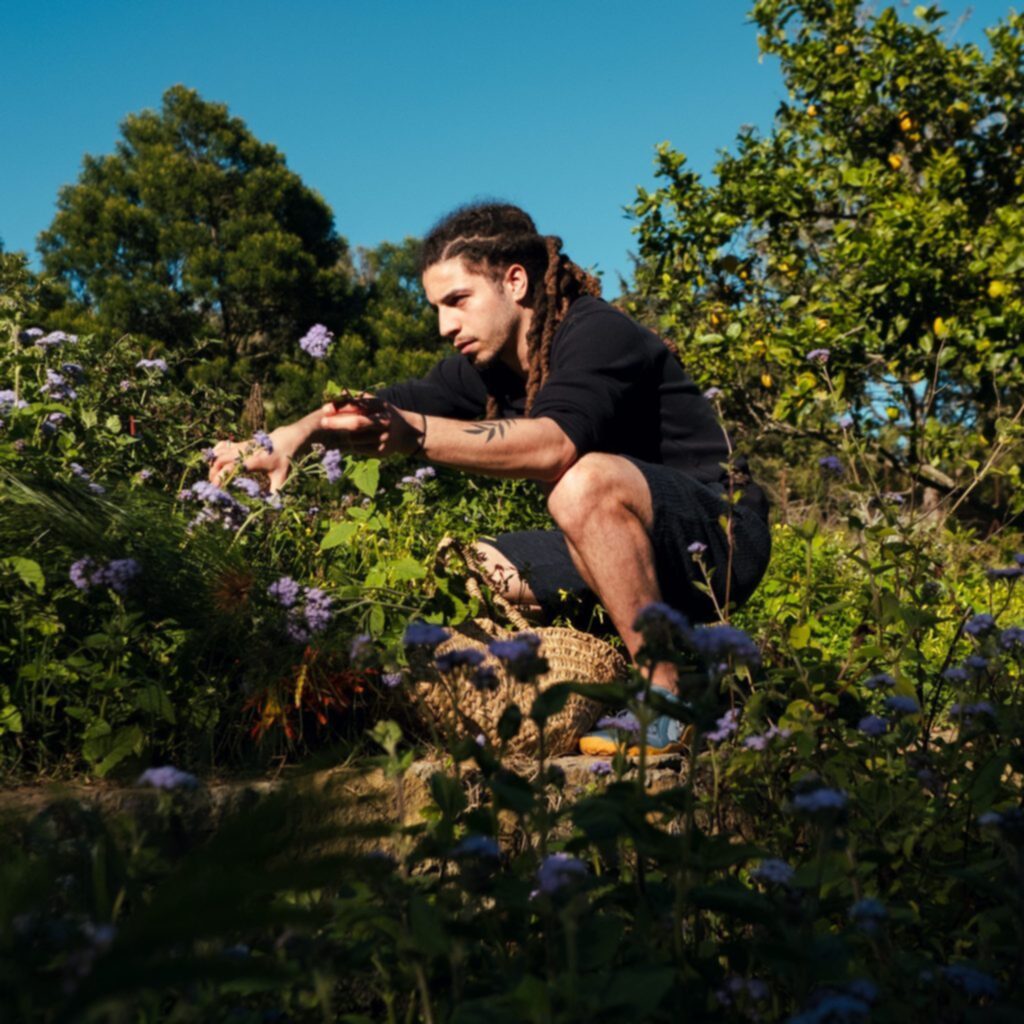
It has taken me the full 29 years to somewhat grasp how I even begin to understand my sense of belonging. I have come to learn that it is not static, and it could never be – but why would we want it to be? The layers which have shaped my sense of self span many, many dimensions – some of which I will never fully understand. And so, whilst the obvious answer would be to start explaining my sense of belonging through the lens of where I live – which is truly a significant part of how I approach what belonging means to me – I want instead to begin by attempting to acknowledge the full spectrum of what belonging might mean to you.
To me, belonging is synonymous with a sense of safety – and there have been many times in my life when I have felt unsafe, insecure and vulnerable. Those experiences are equally valuable in understanding the places, feelings and environments I have come to associate with belonging.
I feel deeply privileged to have inherited a sense of belonging from my late mother, Nancy. My mother is an immigrant, having moved to London from Kuwait when she was just three years old. An Arabic single mother to four of us, she would identify as a Brit – and rightly so – but she was quietly cautious about sharing too much of her Arabic heritage, particularly her name – Nancy Dawood Mohammed Mohammed. My mother was never ashamed – of that I am certain. She was a pragmatist who understood the landscape her children would have to navigate, and who knew that the prejudice attached to a name, a heritage, a way of being, could close doors before they were ever opened. She wanted to give us every opportunity she could. As her son, I say her name with pride – Nancy Dawood Mohammed Mohammed. It tells a story I am only beginning to unravel – and one I wish, more than anything, I could still unravel with her.
My mother passed away in 2020, when I was just 23 – at a time when my mind was maturing to a point where the important questions were beginning to surface. Questions about who I am, what has shaped me, and the experiences that a younger version of me perhaps wasn’t equipped to fully grasp. In her absence, I find myself trying to understand her beyond the mother I knew – to piece together the woman she was before us, and the worlds she carried within her. She wasn’t religious, but those worlds were vast – her father’s family from an Islamic background in Kuwait, her mother’s from a Christian family in Egypt. She moved through circles that felt so distant from one another, and yet she was so often the connecting force between them – bringing people together across difference, across distance, across backgrounds that had no obvious reason to meet. There was something almost unworldly in her ability to do that, and I see now that it was one of her greatest gifts.
What I remember of her culture wasn’t doctrine or tradition in any formal sense. Our home was the place where boundaries and barriers simply didn’t exist. Where we lacked in material, we were rich in culture, community and care. But if I trace belonging back to its very root – past the community, past the home, past everything that shaped me – I arrive at something much smaller and much more tender than all of that, something that no amount of words can quite do justice to. My mum’s voice, soft and sure, counting my toes in Arabic at bath time.
The Hayden-Smith name came through my father – of Jamaican and Italian heritage – when they married, and so it became ours. My dad left our family home when I was young, and my mum gave us everything she had – but there are questions that losing a parent leaves behind that no one else can answer for you. I am the son of a Kuwaiti-Egyptian mother and an absent Jamaican-Italian father, whose roots stretch back to West Africa – threads of empire, colonialism and the slave trade that I am only beginning to find the courage to follow, and hope one day to fully explore. And yet, at the same time, I am undeniably and completely British – born and raised in Ladbroke Grove, shaped by its history, its streets, its sounds, its people. I am all of that, every layer of it. And at 29, as I begin to address the traumas that have shaped my life and seek a deeper understanding of all that I carry, I find myself arriving – perhaps for the first time – at a genuine sense of pride in who I am, in the fullness and complexity of my identity, and everything it contains.
And so community became everything. The mothers and fathers, brothers and sisters, who aren’t biological but are ever present – the people who show up, who hold you, who count you. That is where belonging lives when family, in the traditional sense, is out of reach. North Kensington gave me that, and it continues to give me that still.
This corner of London is where I became a father, where I found purpose, and where this city revealed more of itself to me than I had ever expected. It is also, by no small irony, a stone’s throw from some of the most powerful institutions in the world – where decisions are made, where wealth is concentrated, and where people from every corner of the globe converge. That proximity – between the most and the least, between power and its absence – is something I live with every day, and it sharpens the questions I carry about who this city is truly built for. To speak of this place and belonging without speaking of Grenfell would be to tell an incomplete truth – and for those working in and around the built environment, Grenfell must be understood as the ultimate failure of that environment, the worst imaginable outcome of negligence, indifference, and a system that placed cost above human life. On the 14th of June 2017, seventy-two of my neighbours lost their lives, and I hold their names, their faces, their stories, with the deepest respect and sorrow. They deserved so much more from the city they called home, and that loss – the weight of it, the permanence of it – lives in this community and in everyone who was shaped by it, deepening, more than anything else, my understanding of what belonging truly means, and what it costs when a system decides, quietly and consistently, that some people simply matter less.
I am raising my children here, and I want for them what my mother wanted for us – a home where boundaries and barriers don’t exist, where they are held and counted and known. The landscape they are growing up in, however, feels increasingly at odds with that vision. Division is not new – it has always existed in the fabric of our cities, our policies, our public spaces – though the division of the past was faced by communities who took their stand when far more was at risk, when far more was at stake, when the cost of speaking out was not a difficult conversation but something altogether more dangerous. The change they fought for, often at great personal sacrifice, is the reason I am able to sit here today, in a cafe in North Kensington, typing this up as part of a curatorial panel for one of London’s most prestigious architecture festivals. I do not take that lightly. That privilege – and it is a privilege – is the direct inheritance of movements and people who refused to accept the world as it was, and in recognising that, I feel the weight of something being passed on – a baton, a responsibility, the understanding that the work is not finished, and that those of us who have benefitted from the struggles of others have an obligation to carry it forward in whatever way we can. What makes that feel more urgent still is a narrative being platformed, amplified and incentivised right now that is finding its way into communities, homes and families in ways that feel increasingly difficult to ignore. The walls going up – visible and invisible – are the very antithesis of everything my mother embodied, everything our home stood for, and everything I am, in my own small way, trying to contribute to.
It is why, when I was asked to write on the theme of Belonging for the London Festival of Architecture 2026, I did not hesitate. My decision to step into the world of LFA and NLA is rooted in a keenness to explore what belonging means through the lens of my own lived experience – and to engage with a space dedicated to leading and shaping London’s built environment. It is the difference between a city that holds its people and one that discards them, between a building that says you are seen and one that says you were never considered at all.
Belonging is one of the most timely and necessary lenses through which we can examine the built environment right now. At a moment when division, displacement and inequality are reshaping our cities – when the question of who London is truly built for grows louder by the day – architecture, public space and design have both the power and the responsibility to respond. This year’s competition invites architects, designers and thinkers to sit with that responsibility. To ask not just what we are building, but for whom. And whether the people who will live, work and move through those spaces will ever truly feel that they belong there.
Every dimension of my sense of belonging – my mother counting my toes in Arabic at bath time, the boundaryless home she created, the community that held us after Grenfell, the children I am raising in North Kensington today – has shaped every single thing I do. I bring all of it to this theme. And I am acutely aware that in the constraints of a word count, I have only scratched the surface – of my own story, and of what belonging truly contains. That, perhaps, is the point. Belonging is vast. It is layered and contradictory and deeply personal, and no single voice can hold all of it. I hope that in exploring this theme, this year’s festival creates space for the many, many people who have spent their lives searching for the same thing I have – a place, a feeling, a moment, where they are simply, and completely, at home.
Find the shorten version of the essay in the LFA2026 printed guide – available for pick up at the London Centre from 12th May.
Explore Tayshan’s work at Grow to Know here.
Sign up to Tayshan’s Substack here.
Explore the LFA2026 programme around ‘belonging’ here.