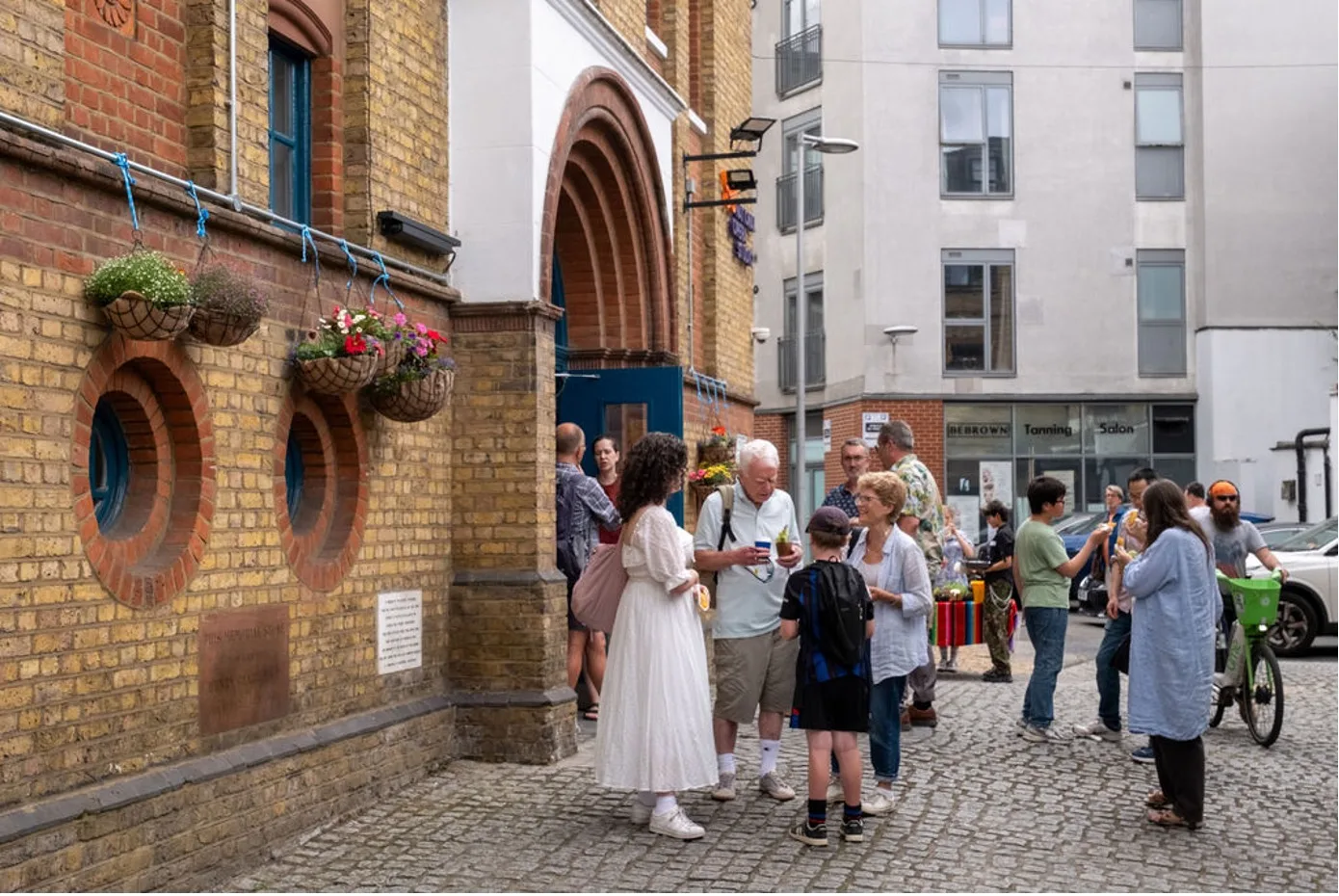
It’s 6pm, and a big group of women has already assembled. I had really thought no one would come when I realised England was playing in the World Cup at the same time. It turns out the Venn diagram of men’s football and a women’s walk has little overlap.
We kick off at 6.05. Already, some in-jokes struck up, and the mood is light-hearted as I introduce ideas of flâneurs and flâneries, collective walking, and drifting through the city, led by our intuition. I speak of the radical act of walking through urban public space as women, following in the footsteps of the Suffragettes, Reclaim the Streets and #MeToo. I touch on bell hooks and the idea of establishing our presence in space through movement.
We start up the high road of Wood Green, a mass of women, a gaggle of girls, ambling against the rush hour crowds. A man on a motorbike shouts “LADIES NIGHT!” as he speeds past.
We meander through an alleyway, behind the mammoth Wood Green Mall, and emerge onto a quieter road, coming to a stop in a new pocket park. Anna Burton, my colleague from Haringey Council, speaks about the public realm improvements that have recently been done with the community here. We talk about cycle lanes and cycling in the city, how some of us find safety in the speed, yet others fear the aggression of the road. My bike gives me freedom to cycle home after dark, one woman says.
We debate which way to go next. Those familiar with the area make suggestions, others are drawn towards the new developments that have popped up high. We wander and stop at the corner of a cul-de-sac, with new-build high rises towering above us to one side, and single-story decaying industrial buildings on the other. The latter will undoubtedly be next to be demolished. The footpath crumbles beneath us. It’s remarkable how all of these new London buildings look exactly the same. No longer in the shadow of the mall, we could be anywhere at all in the city. We talk about gentrification and regeneration, how soulless these developments feel, but how the need for housing has to be met somewhere, somehow. We speak about the railway, how it dissects the neighbourhood, drawing the line between rich and poor across the borough.
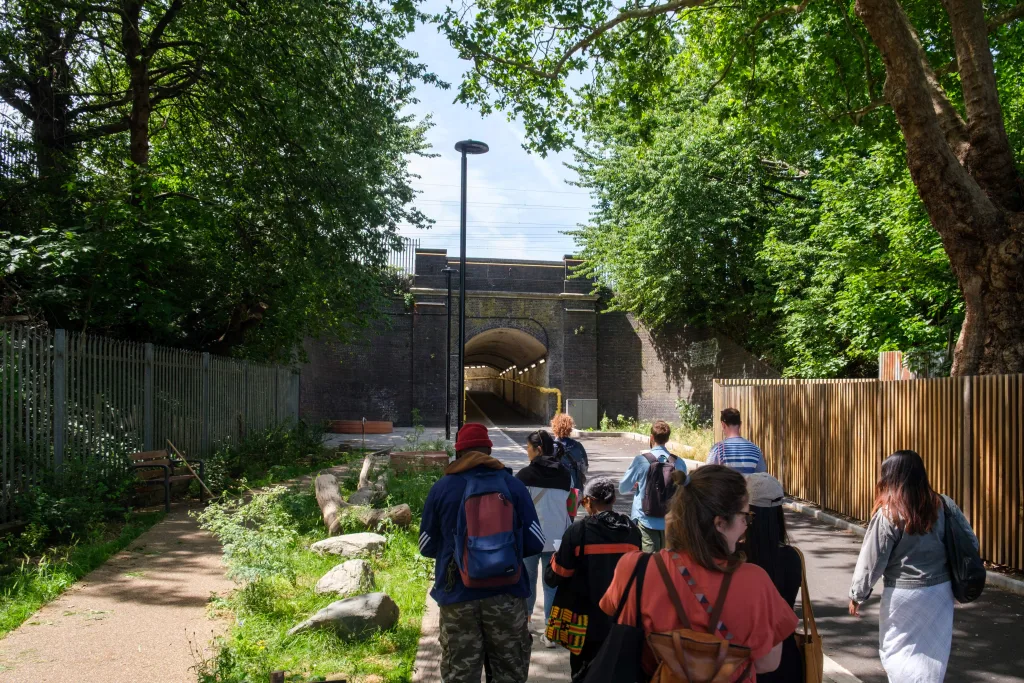
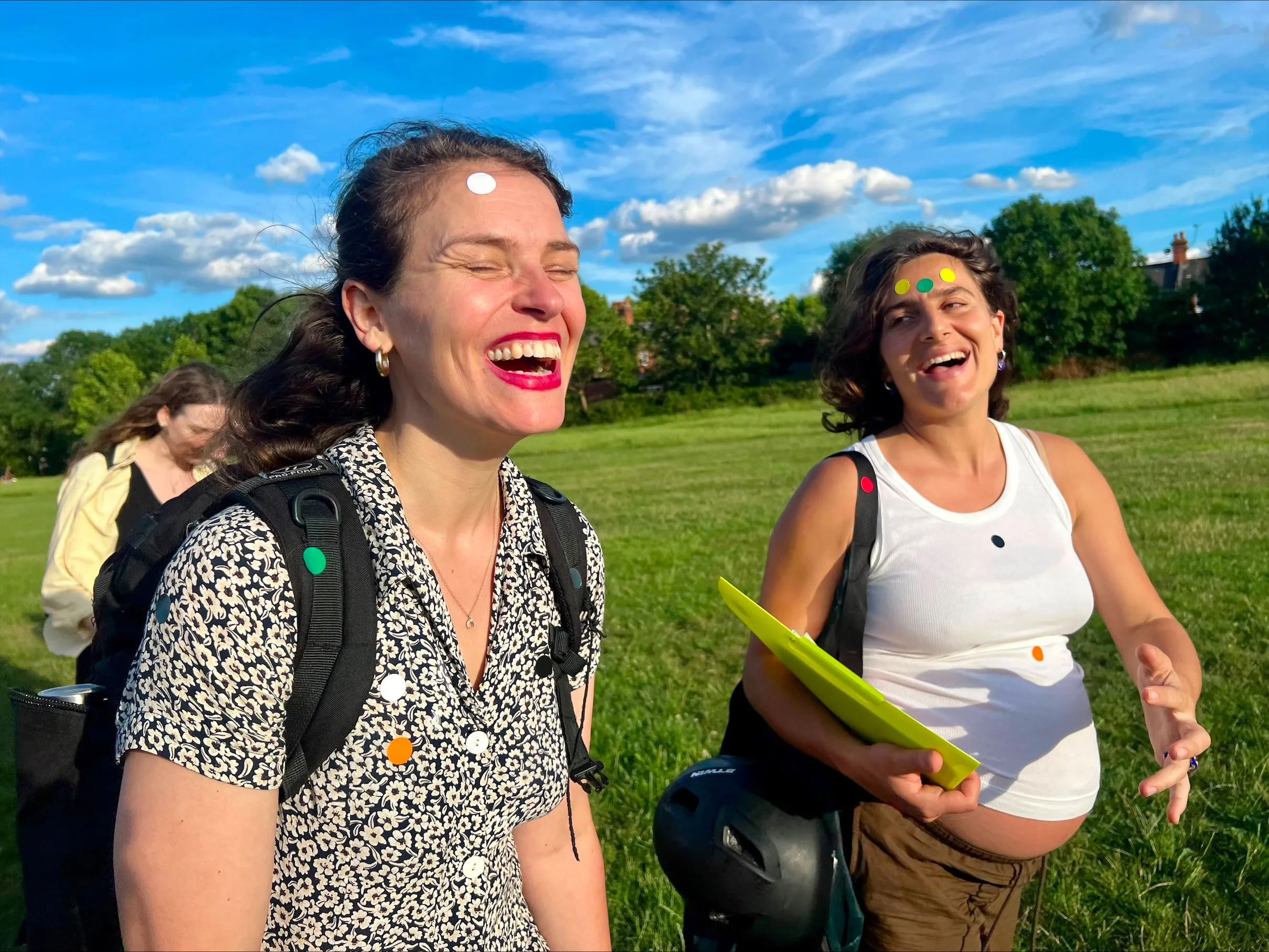
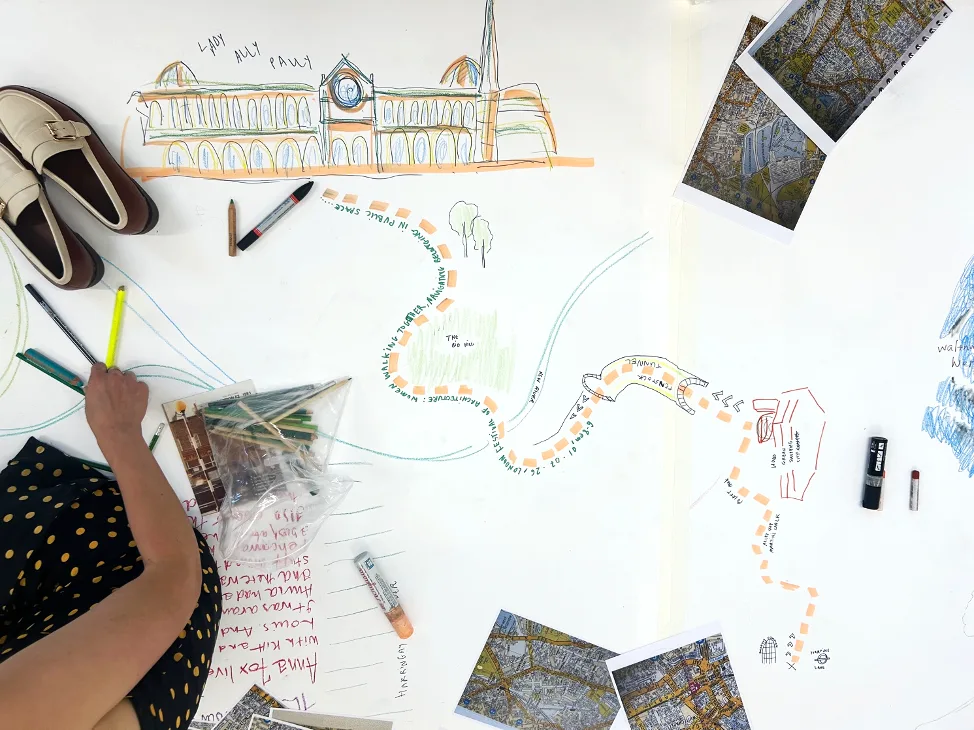
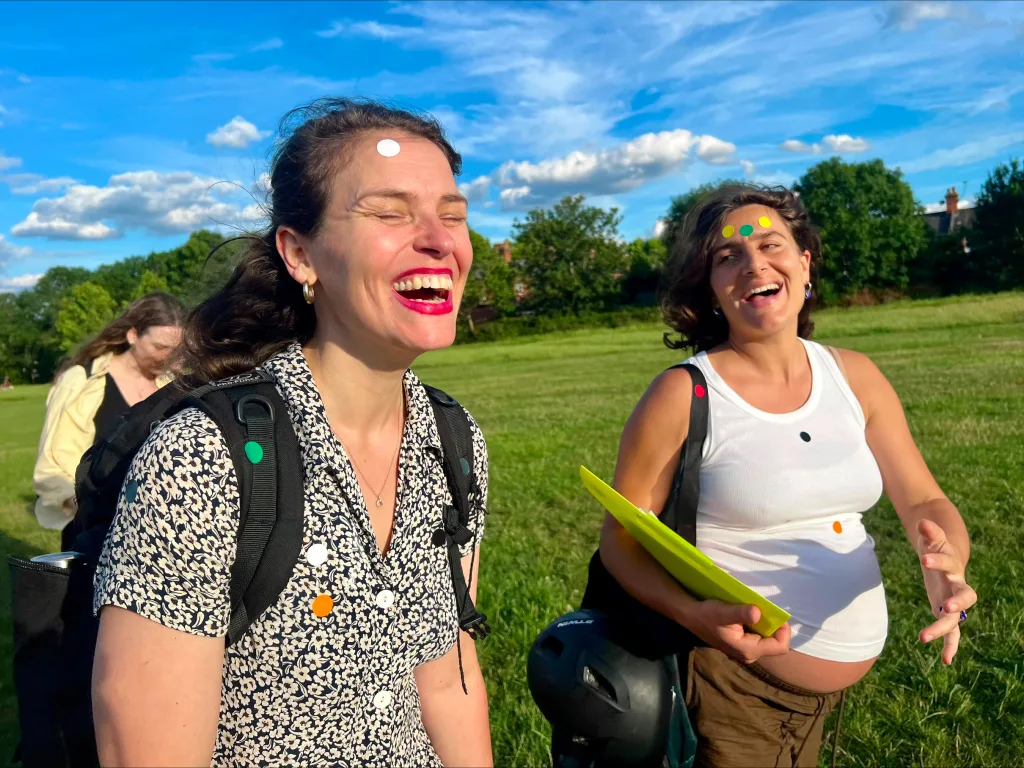
We move on. We reach the railway at Penstock Tunnel, another recent Haringey Council project with new planting and artwork attempting to make it feel less hostile. We stop, and Gaia Crocella hands out sticker dots and introduces body-mapping: a way to record how our bodies feel in space as we move. We continue through the tunnel, emerging onto a narrow alleyway bound by a high metal fence. We walk along in single file. The New River is just visible on the other side of the fence, with low-level industrial buildings along its banks.
Taking a sharp right, we cross the murky river on a small footbridge and down a footpath to reach Hornsey. Clusters of various residential terraces surround us as we navigate towards the foothills of Ally Pally. The group has mixed, and small handfuls of conversation have formed. We cross a large field, partly overgrown and partly manicured, for some kind of ball game. It’s a gorgeous evening, and there are dog walkers, couples and groups out enjoying the late sunshine. We begin our uphill ascent. There is chat about walking in the city, about transport planning, about childbirth. Someone has planted a wildflower meadow on one side of the path, and I hear remarks of how beautiful it is. The climb turns steep, and we offer to push up Gaia, who is 8 months pregnant. We finally all make it to the top and gather again. I offer space for reflection; some stay quiet, others speak. I close with the words of Rebecca Solnit: “Walking is a way of knowing the world through the body and the body through the world.” We head to the pub for a pint.
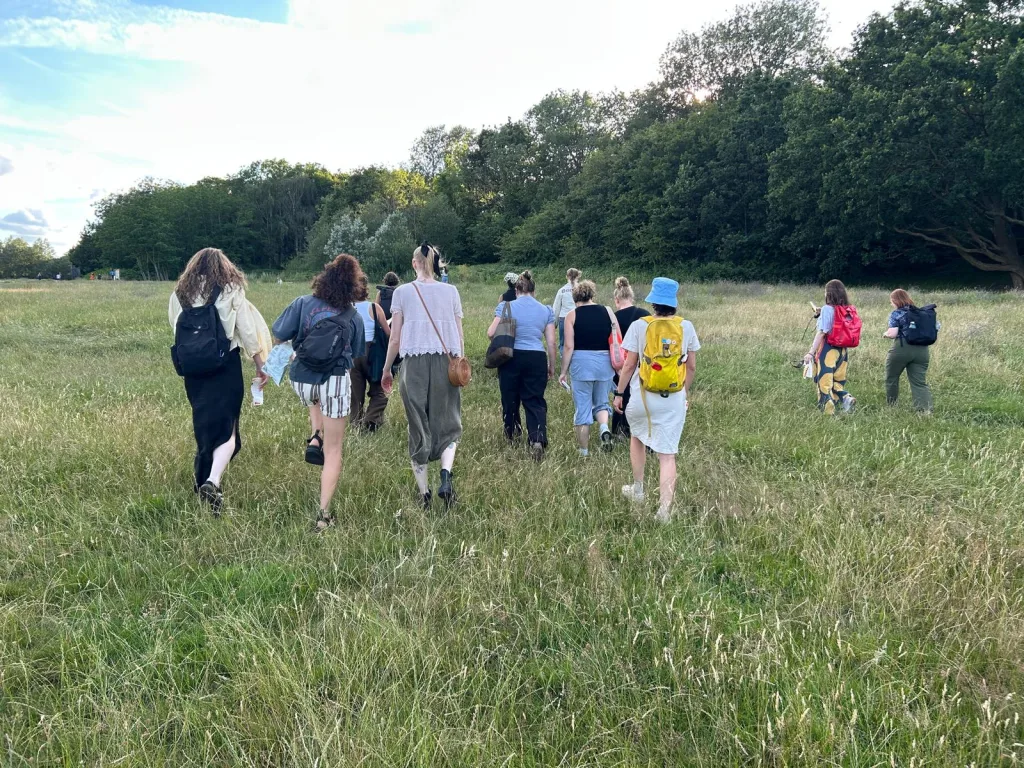
Exploring what belonging means and how it can be nurtured, shared, and expressed through collaborative walking is central to my practice – bringing this approach to my home borough as part of LFA this year has been such a memorable, joyful experience
(c) All photos courtesy of Raisa Desypri